
Is a Custom Wedding Suit Worth the Cost for Grooms?
Last Updated: October 30, 2026
Quick Summary
A custom wedding suit is worth it for grooms who care about fit, want a fabric or color that is hard to find off the rack, and expect to wear the suit again. For a single day of formalwear where fit is secondary, a rental is usually the better choice.
Custom suits cost more upfront, but cost per wear drops with repeat wear.
Made-to-measure suits typically run $700 to $1,500 for the groom's suit.
Fully custom or bespoke suits typically run $1,500 to $4,000 or more.
Rentals typically run $150 to $300 and are returned after the event.
Fully custom orders should start about five to six months before the wedding.
Table of Contents
Is a Custom Wedding Suit Worth It? The Short Answer
Is a custom suit worth it for a wedding? For most grooms, the answer depends on how often they will wear the suit after the big day and how much fit matters to them.
Here is our short answer. A custom wedding suit is worth the cost when you care about fit and comfort, want a color or fabric that is hard to find off the rack, and expect to wear the suit again. It is usually not worth it when you need one outfit for one day and fit is a secondary concern.
Some grooms also value the process itself. A personal consultation, measurements taken for your body rather than a size chart, and a suit that moves with you on the dance floor all count toward the total value. The sections below break down each part of that decision so you can make it with confidence.
How Custom, Made-to-Measure, and Off-the-Rack Suits Differ
Before comparing costs, it helps to know what you are actually buying. The three main categories differ in how the suit is built and how closely it matches your body.
Off-the-rack suits are mass-produced in standard sizes. You choose a size based on your chest, waist, and height, then rely on alterations to adjust the fit.
Made-to-measure suits start from a base pattern that is adjusted to your measurements. The fit is closer than off-the-rack, and the price sits in the middle of the range.
Fully custom or bespoke suits are cut from a pattern drawn specifically for you. The process usually includes multiple fittings and offers the widest choice of fabric, lining, and construction. It is the most expensive path and takes the longest.
Semi-custom is a common middle ground at many retailers. The practical question is how much fit precision you need compared with the cost and timeline you can accept.
Custom Wedding Suit vs Rental: A Side-by-Side Comparison
The choice between buying a custom suit and renting often comes down to fit, cost per wear, and what you want to keep afterward. Renting is the default for many weddings because it is convenient and lower in upfront cost. Learn how to avoid a poorly fitting rental suit before you commit.

A groom standing in a bright fitting room while a tailor pins the sleeve of a navy suit jacket is the kind of fitting process that separates a custom suit from a rental. The difference shows up most in how the jacket sits on the shoulders and how the trousers break at the shoe.
Factor | Custom Wedding Suit | Rental |
Fit | Built to your measurements | Standard sizes with alterations |
Upfront cost | Higher | Lower |
Cost per wear | Drops with repeat wear | Same cost every time |
Ownership | You keep the suit | You return it |
Color and fabric choice | Wider selection | Limited to the rental catalog |
Timeline | Requires weeks of lead time | Often available on short notice |
Pros of a custom suit:
A tailored fit that suits your body
Ownership and the option to wear it again
More fabric, color, and style choices
Cons of a custom suit:
Higher upfront cost
Longer lead time that requires planning
Requires fittings and time commitment
Pros of renting:
Lower initial cost for a single event
Simpler logistics for large groomsmen groups
Good fit for those who will never wear the suit again
Cons of renting:
Fit is often a compromise
You do not keep the garment
Limited color and style options
If you are outfitting a large wedding party, many grooms split the difference: a custom suit for the groom and rentals for the groomsmen. See our wedding suit rental packages for groomsmen for options and details on renting for the whole party.
What a Custom Wedding Suit Costs and Where the Money Goes
This is the section most grooms skip to, and it is also where most articles go vague. Instead of a single headline number, use realistic ranges and a line-item breakdown so you can compare quotes fairly. Pricing depends on fabric, construction, fittings, and quantity, so request a quote for your specific order.
Typical upfront cost by path (groom's suit only):
Path | Typical range | What the price usually includes |
Rental | $150-$300 | Jacket, trousers, shirt, tie, shoes; alterations limited to hem and sleeve; returned after the event |
Off-the-rack + alterations | $300-$700 suit + $75-$200 alterations | Suit off the rack, basic tailoring (hem, waist, sleeves), no fabric choice |
Made-to-measure | $700-$1,500 | Adjusted base pattern, fabric selection, one or two fittings, minor alterations |
Fully custom / bespoke | $1,500-$4,000+ | Pattern drawn for you, multiple fittings, widest fabric and construction choice |
The quote should specify the exact fabric and construction you are getting.
Where the money actually goes. Ask for a written quote that separates these lines:
Fabric: usually the largest single line item. Italian and British mills cost more than house fabrics, and a full canvas construction adds labor on top.
Construction: fused, half-canvas, and full-canvas jackets sit at different price points. Full canvas takes more handwork and more fittings.
Fittings: each additional fitting adds tailor time. A quote that includes two fittings is not comparable to one that includes four.
Alterations: confirm whether post-delivery alterations are included or billed hourly. A $100 alteration allowance can disappear fast.
Rush and delivery fees: these should be listed separately, not folded into the suit price.
Pro Tip When you request quotes, ask each provider for the same three things: fabric mill and composition, number of fittings included, and whether post-delivery alterations are covered. That turns three different quotes into a real comparison.
To judge value, divide the total cost by the number of times you expect to wear the suit, then add estimated maintenance and any future alterations. A suit worn for a wedding, a few formal events, and a holiday party spreads its cost across several occasions, which can make a custom purchase more reasonable than it first appears. A suit worn once does not.
Visit the Bridal Knight website or schedule a consultation for current pricing and a quote tailored to your order.
How Long a Custom Suit Takes and a Wedding-Day Ordering Timeline
Custom suits generally need more time than rentals, so planning the timeline early matters. Plan backward from the wedding date and build in slack for fittings, alterations, and the occasional remake. The schedule below assumes a fully custom or made-to-measure order; off-the-rack plus alterations can compress to four to six weeks, and rentals to a few days.
Backward-planned schedule (custom or made-to-measure):
Five to six months before: Book the consultation. Choose style, fabric, and color, and confirm the provider's lead time in writing.
Four months before: First measurements and deposit. Ask when the first fitting will be scheduled.
Three months before: First fitting. Check shoulders, sleeve length, jacket length, and trouser break with the shoes you will wear.
Eight to ten weeks before: Second fitting after adjustments. Confirm the delivery date and whether post-delivery alterations are included.
Four to six weeks before: Final fitting and pickup or delivery. Walk, sit, and raise your arms in the suit.
Two to three weeks before: Buffer window. Any remaining alterations should be finished here, not the week of the wedding.
Fitting checkpoints to verify at each appointment:
Shoulders sit flat with no divot or pull.
Sleeve ends at the wrist bone with about half an inch of shirt cuff showing.
Jacket covers the seat and the vent lies flat.
Trousers break cleanly on the shoe without pooling.
You can sit, dance, and raise your arms without the jacket riding up.
Watch Out Do not schedule the final fitting inside two weeks of the wedding. That leaves no room for a remake, and a rushed alteration on a custom garment is how grooms end up in a suit that does not fit on the day.
If you are short on time. A semi-custom or off-the-rack suit with a good tailor can take several weeks, and a rental can often be arranged on shorter notice. Neither gives you the same fit precision, but both beat a custom order that arrives late. Match the path to the calendar you actually have, not the one you wish you had.
Build in a contingency plan. If a fitting reveals a problem, you need time to correct it. Ordering earlier gives you room for an unexpected change, such as a weight shift or a schedule conflict. Confirm the final fitting date on your timeline and put a reminder two weeks before it to check in with the provider.
Finding Affordable Custom Wedding Suits Online
Online ordering has made custom suits more accessible, especially for grooms who do not live near a showroom.
When comparing providers, look for clear measurement guidance and a straightforward return or exchange policy, and compare the total price rather than just the headline figure. Our guide on finding lower-cost custom options walks through where to look for value.
Online does not mean you skip the fitting. Some grooms use an in-person fitting to confirm measurements before the final order. For groomsmen spread across several states, coordinating measurements and delivery early helps keep everyone on schedule.
Booking Your Fitting and Choosing the Right Suit for Your Wedding
Start with a consultation. A good fitter will ask about your wedding style, venue, and how often you expect to wear the suit. Bring a photo of the look you want and any accessories you plan to wear, such as your shoes and tie.
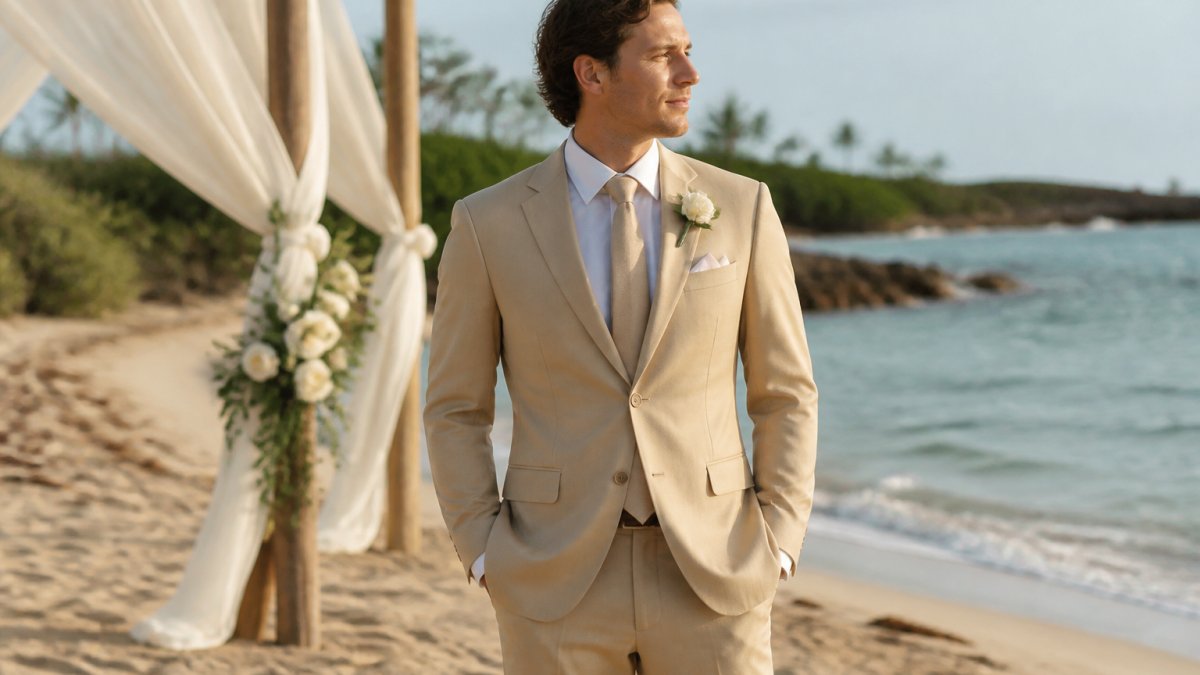
Choose your color and fabric with the setting in mind. Navy and charcoal are versatile for most weddings. Read whether a tan suit is right for a beach wedding to judge how it fits your setting.
At the fitting, pay attention to the shoulders, the length of the sleeves, and how the trousers sit when you sit down and stand up. A custom suit should feel comfortable enough to move, sit, and dance in.
If you have questions about whether a custom suit is right for your wedding, set up an in store appointment!
Frequently Asked Questions
Is a custom suit worth it for a wedding?
A custom suit is worth it when you will wear it again, need a precise fit, or want a specific fabric, color or style that rentals do not offer. If you only need a suit for one day and do not care about fit beyond acceptable, renting is usually the more practical choice. Compare the total cost per wear, including alterations and any future events, before deciding. Pricing depends on fabric, quantity, delivery timing and fittings, so request a current quote from Bridal Knight for your specific order.
Is it better to buy or rent a suit for a wedding?
Buying makes sense if you plan to wear the suit at other events, want a better fit than a rental can offer, or need a specific color that is hard to find. Renting suits one-time use and keeps upfront costs lower. For groomsmen with varied sizes or a tight budget, rental is often simplest. Bridal Knight offers both custom purchase and rental options, so you can compare them directly against your guest list and budget.
How long does it take to get a custom suit made?
Custom suits typically need several weeks from measurement to delivery, including fittings and any alterations, so order well ahead of the wedding date. Timelines vary with fabric availability, the number of suits in an order and how many fitting rounds you need. Schedule your in-store consultation or mobile fitting early, and confirm the expected delivery date in writing. Bridal Knight can provide a timeline for your specific order.
Can you wear a custom wedding suit again?
Yes. A well-made suit in a versatile color such as navy or charcoal can be worn to job interviews, dinners, holiday events and other formal occasions. Choosing classic colors and a timeless cut increases how often you will wear it, which lowers the cost per wear. Keep the suit maintained with proper storage and occasional professional pressing to extend its life.

Comments